Suffering in First Place: How Gen Z Accidentally Turned Mental Health Into a Competition
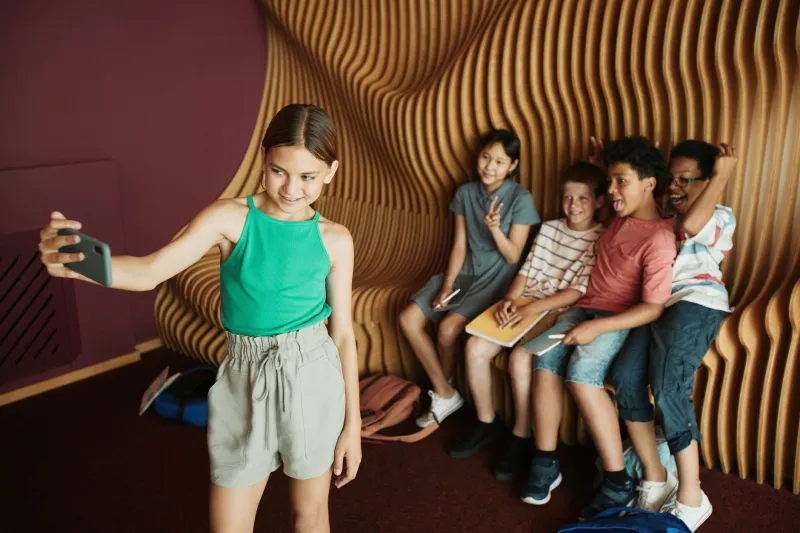
Picture this: you walk into first period on a Monday morning. Someone mentions they only slept three hours. Someone else immediately counters with two. A third person, who has been silent until now, announces they didn't sleep at all because their anxiety was, quote, "absolutely feral" last night. The table goes quiet in a kind of reverent awe. They win. No trophy, no prize money — just the invisible but very real crown of being the most destroyed person in the room.
Congratulations. You've just witnessed the Anxiety Olympics.
And before you roll your eyes and click away, ask yourself honestly: have you ever casually mentioned how burned out you are and felt, somewhere deep down, just the tiniest bit satisfied when people reacted with concern? Yeah. We're all a little guilty here.
When Awareness Became Currency
The mental health conversation in Gen Z spaces didn't start as a competition. It started as something genuinely revolutionary — a generation finally refusing to bottle everything up, finally pushing back against the "just push through it" mentality that wrecked previous generations. That was good. That was necessary. Therapy became normalized. Talking about anxiety stopped being a shameful confession. TikTok filled up with people saying "hey, this is what a panic attack actually feels like" and millions of teenagers felt seen for the first time.
But somewhere in that evolution, something got tangled. Awareness turned into identity. And identity, especially in the social media era, has a way of turning competitive real fast.
When you can get genuine connection, attention, and validation from sharing how bad you feel, the brain — being the sneaky little reward-chaser it is — starts associating struggle with social payoff. It's not a character flaw. It's just how humans work when you drop them into an environment that runs on engagement metrics.
The "I'm Fine" Problem
Here's where it gets genuinely weird: admitting you're doing okay has become almost socially awkward in certain Gen Z circles. Say you're fine and you risk coming across as out of touch, sheltered, or — worst of all — basic. The unspoken social script in a lot of teen spaces right now goes something like: the more you're suffering, the more you get it. The more you get it, the more you belong.
So what happens to the kids who are actually doing alright? They either get quiet about it, or they start scanning their internal experience for something, anything, to contribute to the suffering conversation. A little stress becomes "my anxiety is through the roof." A bad week becomes "I'm honestly in my depressive era." Normal tiredness becomes burnout. The language of mental health crisis gets borrowed and stretched to cover experiences that are just... regular life being regular life.
This isn't to say those feelings aren't real or valid when they show up. It's to say that the pressure to perform distress is its own kind of exhausting — and it muddies the water for everyone.
The Aesthetic of Falling Apart
Scroll through any corner of Gen Z social media and you'll find it: the romanticization of struggling. The "I haven't left my bed in three days" post that gets 40,000 likes. The crying selfie with the caption that's somehow both devastating and perfectly lit. The "this is your sign that it's okay to not be okay" content that functions more as a vibe than an actual support resource.
None of this is malicious. Most of it comes from a real place. But the aesthetic layer on top of genuine pain creates a strange feedback loop where looking like you're falling apart becomes aspirational. And once something becomes aspirational, the performance instinct kicks in — even for people who aren't consciously trying to perform anything.
There's a version of mental health content that genuinely helps people feel less alone. And then there's the version that's essentially a highlight reel of someone's worst moments, curated and filtered and served up for consumption. Telling the difference is getting harder.
What It Does to the People Who Are Actually Struggling
Here's the part nobody really wants to talk about: when mental health struggle becomes a social currency, the people experiencing genuine, serious mental health crises get lost in the noise.
If everyone in the group chat is constantly talking about how anxious or depressed or burned out they are, it becomes almost impossible to clock when someone crosses from "doing the relatable suffering bit" into "actually needs help right now." The signal gets buried under the aesthetic. Serious symptoms get dismissed because, well, everyone says stuff like that. It's just the vibe.
That's not a small problem. That's a real one.
Competing to Suffer vs. Learning to Sit With Being Okay
So what's the move here? Because the answer definitely isn't "stop talking about mental health" — that ship has sailed and we're not going back to the era of pretending everything is fine while quietly imploding.
The move is maybe learning to separate awareness from performance. To notice when you're sharing something because it's true and you need support, versus when you're reaching for the struggle language because it's the social currency of the moment. Those are different things, and they deserve different responses.
It's also worth sitting with the genuinely radical idea that being okay — actually, honestly okay — is not a betrayal of your generation. It's not naivety. It's not privilege signaling. It's just a good day, and good days are allowed to exist without an asterisk.
You don't have to win the Anxiety Olympics. There's no medal. The podium is fake. And honestly? The real flex is getting enough sleep, going to therapy if you need it, and not requiring your suffering to be witnessed to feel like it counts.
The Finish Line Nobody Actually Wants to Cross
Gen Z did something important by refusing to stay silent about mental health. That matters. That legacy is real. But the next evolution of that — the actually hard part — is figuring out how to hold space for genuine struggle without turning it into a competition, a content category, or a personality.
Because here's the thing about the Anxiety Olympics: nobody wins. The person who's suffering the most doesn't get better faster. They just get more likes. And that's a trade-off that, when you actually say it out loud, sounds as bad as it is.
Be honest about how you're doing. Get help when you need it. Cheer for the people around you who are having a good week. And maybe — just maybe — let "I'm doing okay" be an answer that doesn't need a follow-up disclaimer.
You're allowed to be fine. Genuinely, no-asterisk, no-footnote fine. And that's not a loss. That's kind of the whole point.