Your FYP is Not Your Therapist (But It's Trying Really Hard to Be)
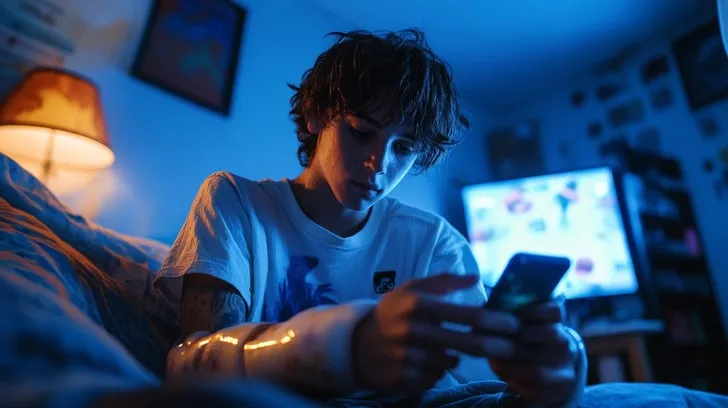
Photo: teenager scrolling phone in dark bedroom late night social media glow, via images.stockcake.com
Let's set the scene. It's 11:47 PM on a Tuesday. You're lying in bed, headphones in, pretending to be asleep so your parents stop asking if you've finished your homework. You open TikTok for what you swear will be just five minutes, and then — boom. The very first video is a creator talking about feeling emotionally exhausted for no explainable reason, looking directly into the camera like they personally know your situation.
You didn't search for it. You didn't follow the account. The algorithm just... knew.
And honestly? That's a little terrifying. But also kind of a relief. Which is maybe the most Gen Z sentence ever written.
The Algorithm Has Read Your Diary (Metaphorically, Hopefully)
Here's what's actually happening behind the curtain, minus the computer science degree required to fully understand it: TikTok, Instagram, and YouTube are running constant, real-time analyses of your behavior. Not just what you like — but what you pause on, what you rewatch, how long you linger before scrolling away, what time of day you're consuming certain content, and what emotional threads connect the rabbit holes you fall into.
The result is a recommendation engine that, after enough data points, can essentially map your emotional state with frightening accuracy. Feeling lonely at 2 AM? Here's a video about attachment styles. Going through something with your friend group? Suddenly your entire feed is about setting boundaries and recognizing one-sided friendships. Stressed about college applications before you've even started junior year? Congratulations, the algorithm has enrolled you in an unofficial anxiety support group.
It's not magic. It's math. But when you're 16 and feeling like nobody around you gets it, math that delivers emotional validation straight to your phone feels pretty close to magic.
The Parasocial Relationship Pipeline is REAL
Beyond the algorithm itself, there's another layer to this whole situation: the creators. The ones who make the content that makes you feel seen.
You know exactly who we're talking about. That one YouTuber whose 'day in my life' vlogs feel like hanging out with a friend. The TikTok therapist who explains your exact emotional patterns in 60 seconds flat. The Instagram creator who posts about their own mental health struggles with a kind of honesty that your actual social circle would never, ever display in public.
These are parasocial relationships — connections where you feel genuine closeness with someone who technically doesn't know you exist. And for Gen Z, they've become a significant, if unconventional, source of emotional support. Research from the American Psychological Association has noted that young people increasingly turn to online communities and creators for mental health information, sometimes before they'd ever consider talking to a school counselor or parent.
Is that a problem? Sort of. Is it also completely understandable given how inaccessible traditional mental health resources are for a lot of teenagers? Absolutely.
The Comfort is Real — So is the Catch
Look, we're not here to be preachy. There is genuine value in what social media delivers when it works the way it's supposed to. Finding a community of people who understand your specific experience — whether that's dealing with ADHD, navigating a complicated home life, or just feeling like you don't fit in anywhere — can be genuinely life-changing. The internet has given marginalized teenagers a sense of belonging that their physical environments never offered.
But here's where the vibe shifts, because there is absolutely a darker side to outsourcing your emotional needs to an AI-powered content machine.
For starters, algorithms are not optimized for your mental health. They're optimized for engagement. And engagement, unfortunately, often means more time on the app — which means the algorithm can just as easily pull you into a spiral of content that validates your worst thought patterns rather than challenging them. Feeling bad about your body? Here's two hours of content about body image that leaves you feeling worse. Anxious about the future? Here's a doom-scroll special about how everything is collapsing. The same system that comforts you can trap you, and it doesn't know the difference.
There's also the issue of what doesn't happen when the algorithm is your primary source of emotional processing. The awkward, vulnerable, necessary conversations with actual humans in your life. The professional support that can offer real coping tools, not just validation. The moments of sitting with discomfort instead of immediately medicating it with content.
So What Do We Actually Do With This?
Here's the honest answer: probably something in the middle, which is an annoying conclusion but also the correct one.
Using social media to feel less alone? Valid. Using it to discover that what you're experiencing has a name and other people share it? Genuinely useful. Following creators who model healthy emotional habits and normalize talking about mental health? Keep going.
But using your FYP as a substitute for actual support, actual conversation, and actual professional help when you need it? That's where the algorithm's limitations become your problem.
The weirdest part of all of this is that we're the first generation to have to figure out where the line is. Our parents didn't grow up with a machine that learned their emotional patterns and served them curated comfort at 2 AM. There's no roadmap here. We're building it in real time, one eerily accurate video recommendation at a time.
Just maybe also text your friend back. The algorithm cannot do that part for you.