We're All Watching the Wreckage: Why Gen Z Can't Stop Consuming Other People's Chaos
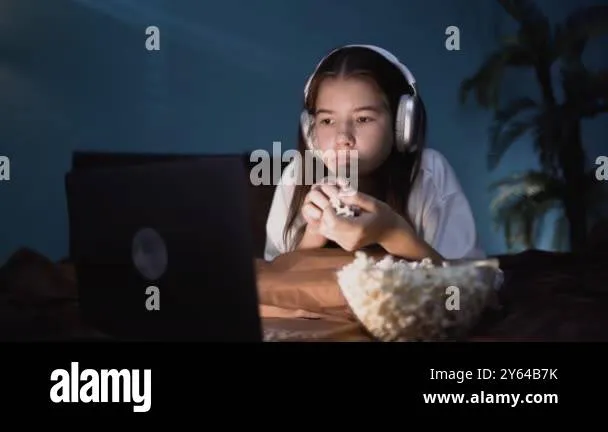
Photo: teenager watching dark TV show at night on laptop in bedroom, via c8.alamy.com
Let's be honest about something that nobody really wants to say out loud at a dinner table: there is a very specific comfort in watching someone else's life completely implode.
Not in a cruel way. Not in a "I hope bad things happen to you" way. More in a "I am lying in my bed at midnight listening to a podcast about a con artist who faked an entire identity for eleven years, and somehow this is the most relaxed I've felt all week" kind of way. If that sentence described your last Tuesday, welcome. You are in extremely good company.
Gen Z did not invent the dark narrative. Humans have been obsessed with tragedy since Ancient Greece literally built theaters specifically to watch fictional people suffer. But something about the current cultural moment — the algorithm, the anxiety, the relentless pressure of being perceived 24/7 — has turned our appetite for chaos into something that genuinely deserves a closer look.
True Crime Is the Comfort Food We're Not Supposed to Admit We Love
The true crime boom is not new news. Podcasts like My Favorite Murder, Crime Junkie, and Serial pulled millions of listeners into a genre that, if you described it to someone from 1995, would sound genuinely disturbing. "Yeah, so basically I like to listen to detailed accounts of real murders while I do my skincare routine." Cool. Normal. Totally fine.
And yet — it is, kind of? Research in psychology has repeatedly pointed toward the idea that consuming dark content in a controlled environment gives our brains a safe space to rehearse fear. We get to feel the adrenaline, process the dread, and then close the app and go back to our actual lives, which, even on the worst days, probably do not involve being investigated by a true crime podcast.
There's also a deeply human need to understand the worst-case scenario. If you know exactly how things go wrong, maybe you can spot the warning signs. Maybe you'll recognize the red flags. Maybe you won't end up as a cautionary tale. True crime, at its core, is a very morbid form of research.
Dystopia as a Mirror We Can't Stop Looking Into
Then there's the fictional side of things. The Hunger Games. The Handmaid's Tale. Black Mirror. Squid Game. Literally any Netflix show that ends with society collapsing and everyone looking exhausted. Gen Z consumes dystopian content at a rate that should probably alarm someone, and yet here we are, pressing play on the next episode at 11:47 p.m. on a school night.
Here's the thing about dystopia that nobody in your English class wanted to fully admit: it's not really about the future. It's about right now, refracted through a funhouse mirror. When Katniss is being forced to perform for an audience that controls her survival, that's not a fantasy — that's a metaphor that hits uncomfortably close to home for a generation that grew up being watched, rated, and algorithmically sorted.
Watching characters navigate systems that are actively rigged against them is cathartic when you're a teenager who spends a significant portion of your day navigating systems that feel actively rigged against you. The SAT. College admissions. The housing market. The job market. Climate change. Take your pick.
Dystopian fiction doesn't make us feel better because the characters suffer more than us. It makes us feel better because the characters survive anyway. That's the part we're actually watching for.
The "Messy Celebrity" Pipeline Is Just Parasocial Dystopia
Okay, but let's talk about the real modern phenomenon: the complete cultural obsession with celebrities whose lives are visibly, publicly, spectacularly falling apart.
You know what we're talking about. The celebrity who posts an unhinged story at 3 a.m. The musician whose public meltdown becomes a TikTok sound. The influencer whose "authentic breakdown" gets 4 million views and a brand deal two weeks later. We watch. We share. We analyze. We make memes. And then we feel vaguely guilty about it, but not guilty enough to stop.
This is parasocial chaos consumption at its most modern. When someone famous is visibly struggling, they become a story we can follow in real time — and there's something deeply compelling about a narrative with stakes you don't have to personally bear. Their drama is entertaining precisely because it's theirs, not ours. We get the emotional engagement without the actual consequences.
But there's a darker layer here that's worth sitting with: when we watch someone else's public spiral, are we processing our own anxieties about losing control? About being perceived? About having a bad day that everyone sees? Possibly. Probably. The internet has made "public failure" something that can happen to anyone, not just celebrities. Watching them go through it — and survive, or not — is a way of stress-testing outcomes we're quietly afraid of ourselves.
So Are We Bad People for Watching the Wreckage?
Short answer: No.
Longer answer: The impulse to consume dark content is not a moral failing. It's a coping mechanism, and a pretty effective one when it's done with some self-awareness. The problem isn't watching the true crime documentary. The problem is when the documentary is the only thing standing between you and actually dealing with the anxiety underneath it.
There's a meaningful difference between "I watched three episodes of a gritty show and now I feel strangely calm" and "I have consumed seventeen hours of chaos content this week and I still haven't texted my friend back or started that essay."
Catharsis is real. Escapism serves a purpose. The human brain genuinely needs ways to process fear and stress that aren't just sitting in a quiet room thinking about your problems. Dark narratives have been doing that job for centuries.
But if you notice that the wreckage you're watching has started to feel less like a release valve and more like a hiding spot — that's worth paying attention to. Not with judgment. Just with honesty.
Because the most Gen Z thing in the world isn't watching someone else's chaos unfold on a screen. It's being self-aware enough to ask why you needed to watch it in the first place.
And then watching one more episode anyway, because you're only human.