Ghost Mode Until It's Official: Why Gen Z Keeps Their Relationships in Stealth Until the Credits Roll

Somewhere between the first "wyd" text and the breakup situational crisis that your friends somehow never saw coming, there was an entire relationship. A real one. With feelings and sleepovers and inside jokes and maybe even a few "I miss you" moments that felt genuinely cinematic. And you heard absolutely nothing about it — because Gen Z has quietly, collectively decided that relationships are now classified information until further notice.
Welcome to the era of the stealth romance, where "talking to someone" is the new "in a relationship" and announcing you're officially dating someone is roughly as rare as a TikTok that doesn't have a trending sound slapped over it.
The Talking Stage Has Swallowed the Whole Timeline
Let's back up. The "talking stage" — that murky, commitment-free purgatory where you're clearly into each other but nobody's said anything real out loud — used to be a brief stop on the way to an actual relationship. Two weeks, maybe three. Now? The talking stage can last months. Entire seasons. Some people are in a talking stage so long it basically has its own character arc.
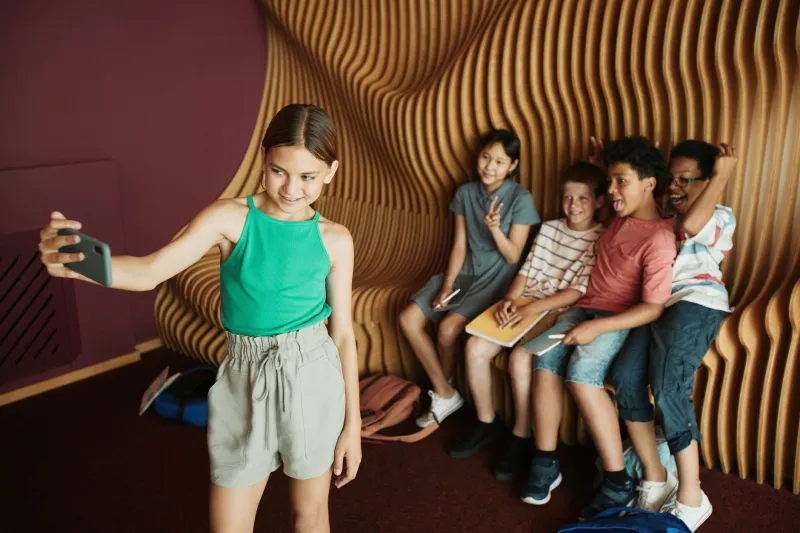
And during that whole time? Radio silence on social media. No soft launches. No cryptic mirror selfies with a mystery hand in the frame. Just vibes, privately.
This isn't accidental. Gen Z grew up watching older millennials perform every stage of their relationships online in real time — the Valentine's Day captions, the "my person" Instagram posts, the couple photos taken at golden hour — and then watched those same couples implode publicly six months later. The lesson was absorbed instantly: announcing something is basically a curse.
The Soft Launch That Never Happened
For a hot second, the "soft launch" was the move. You'd post a story with someone's elbow in it. Maybe a hand holding a coffee cup that wasn't yours. Enough to plant the seed without making a declaration. People would screenshot it and send it to mutual friends asking "wait, who IS that" and the whole thing had this delicious slow-burn energy.
But even the soft launch has started to feel like too much exposure. Too many questions. Too many people suddenly invested in something that might not survive the month. Because here's the real math Gen Z has done: the earlier you tell people, the more witnesses there are to the potential failure. And failing publicly — in a generation that is hyper-aware of how everything looks — is genuinely terrifying.
It's not that teenagers don't want love. It's that they want to control the narrative around it, and you can't control a narrative that you've already handed to twenty people in a group chat.
The Instagram Aesthetic Problem
There's another layer here that's equal parts fascinating and kind of heartbreaking. A lot of Gen Z relationships don't make it to social media because they don't look the way relationships are "supposed" to look online.
Think about what a couple aesthetic actually requires: matching energy in photos, a certain kind of photogenic chemistry, enough shared experiences that are visually interesting enough to post. What if you're dating someone who doesn't like being photographed? What if your relationship mostly happens at 2am in a Taco Bell parking lot? What if it's real and messy and good but it doesn't translate to content?
The pressure to produce a couple that looks good online has made people weirdly ashamed of relationships that are just... normal. So instead of posting something imperfect, they post nothing. The relationship exists entirely in private, which honestly might be the healthiest option on the table, but it creates this strange situation where people are living full romantic lives that are completely invisible to everyone around them.
Why the Announcement Comes After the Breakup
Here's the part that gets genuinely wild. You'll find out your friend was in a six-month relationship approximately three weeks after it ended — when they finally feel safe enough to talk about it because the outcome is already known. The story has an ending. It's no longer a live performance with an uncertain third act.
There's a strange logic to this. Announcing a relationship in progress means inviting everyone's opinions, expectations, and emotional investment into something fragile. Announcing it retroactively means you get to process it on your own terms, and you get the sympathy of a breakup without ever having had to perform the happiness of being in love.
It's not manipulative — it's protective. When you've watched enough relationships get picked apart in comment sections and group chats, keeping yours offline starts to feel less like secrecy and more like self-preservation.
Validation Without the Vulnerability
Here's the uncomfortable part though: some of this privacy isn't about protection. Some of it is about avoiding rejection before it happens. If you never tell anyone you're dating someone, you never have to explain why it didn't work out. You never have to update your status. You never have to deal with the "I knew it" or the "what happened?" texts from people who were barely invested in the first place.
The flip side is that keeping everything private also means you never get to celebrate it. You don't get the hype texts when you start dating someone you actually like. You don't get your friends asking how it's going in a way that makes it feel real. You're protecting yourself from the bad stuff but accidentally cutting yourself off from the good stuff too.
Relationships — even messy, uncertain, definitely-still-in-the-talking-stage ones — get more real when other people know about them. There's something that happens when you say out loud to another human being "yeah, I actually like this person" that makes the whole thing feel more legitimate. Keeping it ghost mode forever has its own kind of cost.
Maybe the Real Flex Is Just Living It
At some point, the most radical thing a Gen Z person can do romantically might just be to exist in a relationship without performing it. Not keeping it a secret out of fear, not soft-launching it for engagement, not waiting until it's perfect enough to post — just living it, telling the people who actually matter, and letting it be whatever it is.
Not everything needs to be content. Not every relationship needs an audience. But maybe — just maybe — the people who love you deserve to know when something good is happening in your life, even if it hasn't hit its Instagram era yet.
Because the speedrun from "we're talking" to "we broke up, btw" with nothing in between? That's not protecting yourself. That's just being alone in a relationship, and that's a whole different kind of lonely.