Performing Realness: The Exhausting New Pressure to Be Authentically Fake
Photo: Chase Bohannon, Silvyn Brown, Clint Calhoun, CC0, via Wikimedia Commons
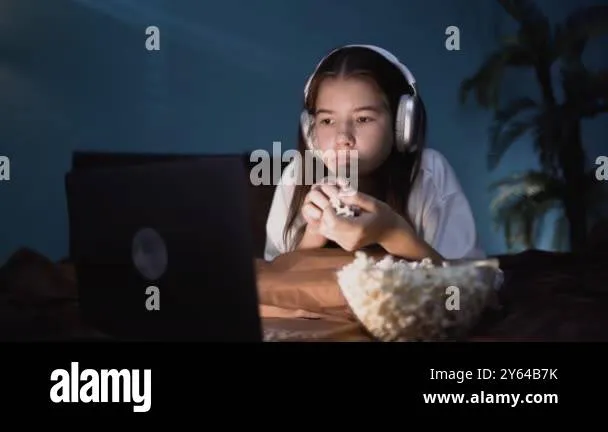
Let's set the scene. You've just posted a TikTok where you're crying, no filter, bad lighting, messy bun that you definitely didn't redo twice. The caption says something like "not gonna pretend I have it together lol." Within four hours, it has 200k views, 14k likes, and a comment section full of people calling you brave and real and refreshing.
Congratulations. You have successfully performed authenticity.
Here's the thing nobody wants to say out loud: the pressure to be real online has become just as suffocating — maybe more suffocating — than the pressure to look perfect ever was. And Gen Z, the generation that was supposed to finally break the cycle of curated, aspirational, Instagram-perfect content, has somehow managed to turn vulnerability itself into an aesthetic.
The Authenticity Arms Race Nobody Asked For
Remember when the big cultural shift happened? Somewhere around 2019-2020, the polished, filtered, Valencia-tinted feed became deeply uncool. Suddenly, grain was good. Crying was content. Admitting you didn't shower for three days wasn't shameful — it was relatable, and relatable was currency.
That shift wasn't fake, exactly. A lot of people genuinely were exhausted by the highlight reel culture of early Instagram, and there was something real and necessary about creators who said, hey, my life isn't perfect either. That mattered. It still matters.
But somewhere along the way, the authenticity thing got commodified. Brands started paying influencers to post "candid" content. Algorithms started rewarding vulnerability because it drives engagement. And suddenly, being messy became a brand strategy just as calculated as any color-coordinated grid ever was.
Now we're in an authenticity arms race. Everyone's trying to out-real each other. The most "unfiltered" person wins. And if you're not posting your struggles, your bad skin days, your anxious 3 a.m. thoughts — are you even being honest? Are you hiding something? Are you fake?
The Watched Self Problem
Here's a philosophical curveball for you: can you actually be authentic when you know you're being watched?
There's this concept in sociology called the "observer effect" — basically, people behave differently when they know they're being observed. It's why reality TV has never once been reality. The moment you pick up your phone to document something, you stop just experiencing it and start presenting it. Even if you're presenting the messy, imperfect, unfiltered version — you're still presenting.
This isn't a personal failure. It's just how being a human with an audience works. But it creates this weird loop where the more you try to be authentic, the more self-conscious you become about whether you're doing authenticity correctly, which makes you less authentic, which makes you try harder, which makes the whole thing collapse into a sweaty, anxious pile of performative realness.
And the worst part? The audience can smell it. Comments like "this feels staged" or "she's just doing it for the views" are the social media equivalent of getting caught. So you have to be authentic convincingly. Which is, you know, the definition of acting.
Relatable is the New Aspirational (And It's Just as Exhausting)
Back in the day, social media pressure looked like this: be prettier, thinner, richer, more put-together than you actually are. That was brutal in obvious ways.
The new pressure looks different but hits just as hard: be more real, more vulnerable, more down-to-earth, more flawed-but-lovably-so than you actually are. Or at least, make sure the flaws you show are the right flaws. Cute flaws. Digestible flaws. Flaws that make people say "omg same" rather than flaws that make people uncomfortable or judgmental.
You can be anxious, but not in a way that scares people. You can be sad, but not in a way that's too heavy. You can be messy, but your mess needs to be aesthetically interesting. There is an entire unspoken rulebook for how to be authentically imperfect online, and violating it gets you ratio'd or subtweeted or quietly unfollowed.
So we've just swapped one impossible standard for another, slightly different impossible standard. Cool. Progress.
The People Who Actually Opt Out
Here's what's interesting: the people who genuinely don't perform their authenticity are often the ones who just… don't post much. Or post inconsistently. Or show up online in ways that feel kind of random and unbranded and honestly a little confusing.
They're not building a narrative. They're not maintaining an aesthetic — even a "raw" one. They post a blurry photo of their lunch and then disappear for three weeks. They share an inside joke that only three people will understand. They exist online the way most of us exist offline: scattered, inconsistent, not particularly optimized.
And nobody calls them authentic. Nobody calls them brave. The algorithm doesn't reward them. They don't go viral for keeping it real.
Which tells you everything you need to know about what "authenticity" actually means in the context of social media. It's not about being genuinely unfiltered. It's about performing unfilteredness in a way that's still engaging, still watchable, still worth the follow.
So What Do You Actually Do With This Information?
Honestly? There's no clean solution here, and anyone who tells you there is probably has a course to sell you.
But here's one thought: maybe the goal isn't to be more authentic online. Maybe the goal is to care less about whether you are. Post the thing because you want to, not because it fits a narrative — whether that narrative is "perfect life" or "beautifully broken." Let your online presence be inconsistent and a little weird and not particularly on-brand.
And maybe, just maybe, save some of your actual realness for the people who know your Wi-Fi password. The unfiltered version of you — the one that's complicated and contradictory and doesn't make for great content — deserves an audience that isn't optimizing their engagement metrics while watching.
Being truly known by a few people will always hit different than being relatably vulnerable to thousands of strangers. That's not a hot take. That's just kind of how humans work.
Now go ahead and screenshot this article to post with the caption "this hit different." No judgment. We're all in the paradox together.